
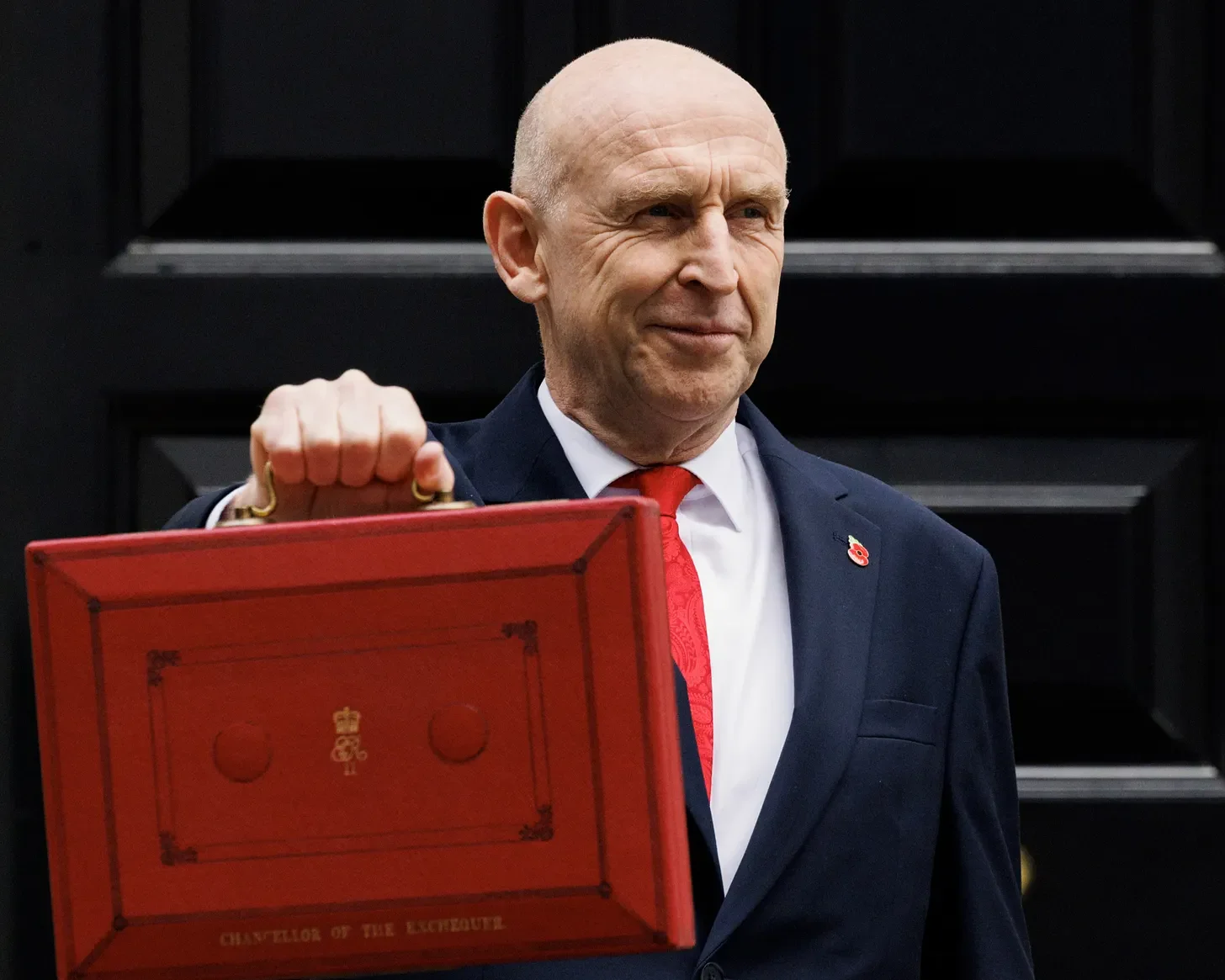
This afternoon, Chancellor of the Exchequer John Healey delivered the 2026 Autumn Budget. Read below for our team’s snap reaction to some of the main points concerning economic growth, innovation and entrepreneurship.
We’ll be digging into things in more depth later in the week — so stay tuned by subscribing to our Friday newsletter, Perennial Gale, if you haven’t already.
On the Autumn Budget in general
Philip Salter, Founder of The Entrepreneurs Network said:
“Founders went into this Budget expecting the worst. Our Entrepreneurs Survey found that 61% expected it to be bad for entrepreneurs, and just 7% expected it to be good.
“There were certainly things to welcome. Those with side hustles and people new to entrepreneurship will be encouraged by the tripling of the Trading Allowance to £3,000, while EMI2 will help scale-ups compete for top talent. The expansion of the High Potential Individual visa to graduates of the top 150 institutions and keeping the Graduate visa at two years for graduates of high-compliance universities are also crucial to attracting and retaining talent.
“But the Budget ducks the cost and risk of employing people, founders’ current number one issue. And while Founders’ Relief might sound like a return to Entrepreneurs’ Relief, as proposed, it looks set to be very narrow.”
On Founders’ Relief and BADR
Philip Salter, Founder of The Entrepreneurs Network, said:
“The casual observer could be forgiven for thinking that a 10% rate of Capital Gains Tax on up to £10 million of lifetime gains marks the return of Entrepreneurs’ Relief, which was cut back in 2020.
“However, the technical consultation points towards a very narrow definition. Founders would need to have owned at least a quarter of the company from the start, while their companies would need at least £10 million turnover and 15 full-time staff, and to pass two of three tests on turnover growth, headcount growth and R&D.
“At the same time, the lifetime limit on Business Asset Disposal Relief is being halved from £1 million to £500,000. In practice, this means the maximum saving falls from £60,000 to £30,000.”
On the cost of employment
Philip Salter, Founder of The Entrepreneurs Network, said:
“Our latest Entrepreneurs Survey with Blick Rothenberg, which closed just before the Budget, found that cutting Employer National Insurance was founders’ top Budget ask. Reducing the obligations on employers in the Employment Rights Act was entrepreneurs’ fourth-highest priority.
“With the National Living Wage rising 3.9% to £13.21, nearly a million young people not in education, employment or training, and unfair dismissal rights after six months and uncapped compensation from January, the number one issue facing entrepreneurs and the next generation remains unaddressed.”
On changes to EMI
Mann Virdee, Head of Science and Technology at The Entrepreneurs Network, said:
“Share options are one of the most important ways startups attract talent from larger companies when they can’t compete on salary. Last year’s expansion of Enterprise Management Incentives (EMI) was a welcome start, and today’s announcement builds on that by doubling the individual share option limit under the Company Share Option Plan (CSOP) from £60,000 to £120,000 from April 2027. We welcome the announcement that the combined cap with EMI will be removed, which means that employees will be able to hold up to £370,000 in tax-advantaged options across both schemes.
“However, renaming CSOP as ‘EMI2’ doesn’t make it as generous as EMI. If EMI2 keeps CSOP’s rules, employees will generally need to hold their options for three years to get the tax relief, whereas EMI options can be exercised tax-efficiently at any point, including when a company is sold.
“The Government should also index the limits of both schemes to inflation so their value isn’t eroded again.”
On the expansion of the High Potential Individual visa scheme
Ian Ng, Researcher at The Entrepreneurs Network, said:
“In Job Creators 2026, we found that 54 of the UK’s 100 fastest-growing companies have at least one foreign-born founder. Attracting and keeping high-skilled talent is vital to Britain’s startup ecosystem, so we welcome the expansion of the High Potential Individual visa to graduates of the world’s top 150 institutions.
“However, if eligibility still depends on general university rankings, standalone business schools such as INSEAD and HEC Paris will be excluded. The Government should also admit institutions that place in the top 50 of the FT or QS Global MBA rankings, or in any of the five broad faculty areas of the QS subject rankings.
“Many of Britain’s foreign-born founders first came here to study, so it is right that the Government will keep the Graduate visa at two years for graduates of high-compliance universities. But building a business takes time. Graduates whose business is being assessed by an Innovator Founder endorsing body should get a further 12 months, so they can build the traction they need to qualify.”
On the Better Regulation Executive
Mann Virdee, Head of Science and Technology at The Entrepreneurs Network, said:
“The Government’s decision to re-establish the Better Regulation Executive, with a mandate to cut outdated regulations and admin burdens on businesses, is welcome. In our latest survey with Blick Rothenberg, 70% of founders said they take a negative view of the level of regulation in the UK. Red tape is hardest for startups, which have to meet many of the same compliance costs as large firms with a fraction of the staff.
“However, re-establishing a unit is the easy part. It needs clear targets, published progress against the Government’s goal of cutting admin burdens by a quarter by the end of this Parliament, and the backing to challenge departments that keep adding rules. It should also work closely with the existing Regulatory Innovation Office and the new Regulating for Growth powers.”
On R&D tax credits
Mann Virdee, Head of Science and Technology at The Entrepreneurs Network, said:
“Scrapping the R&D Claim Notification Form and simplifying the Additional Information Form will make it easier for innovative firms to claim. This matters because R&D tax claims fell by over a quarter in the first full year of the new form. But paperwork is only part of the problem. Founders told the APPG for Entrepreneurship of compliance checks dragging on for two years, only to end with their claims largely upheld.
“In Canada, an R&D claim under review is assessed by an adviser with a science or engineering background, who phones the firm before reaching a decision. In the UK, claims are judged by HMRC inspectors, and HMRC’s panel of subject-matter experts doesn’t review individual claims. The Government should move towards the Canadian model, so that founders can explain their work to someone who understands it.”
On the new Data Centre Covenant
Ian Ng, Researcher at The Entrepreneurs Network, said:
“AI startups need compute to build and scale, yet many UK firms still rely on overseas cloud infrastructure. The Government aims for 6GW of AI-capable capacity by 2030, but its own preliminary estimates suggest we could reach as little as 3.3GW, with viable projects stuck in the grid queue.
“We welcome the Data Centre Covenant’s support for clearing speculative projects from the queue, and greater freedom for developers to build their own grid connections. However, the permission to build on-site power has been limited to ‘exceptionally strategic’ projects. It should be opened up more widely.
“To avoid relying on ministerial discretion, when the Government sets out its definition of a strategic data centre, it should use clear, objective criteria and allow any viable project to generate its own power while it waits for the grid.”